Kaval
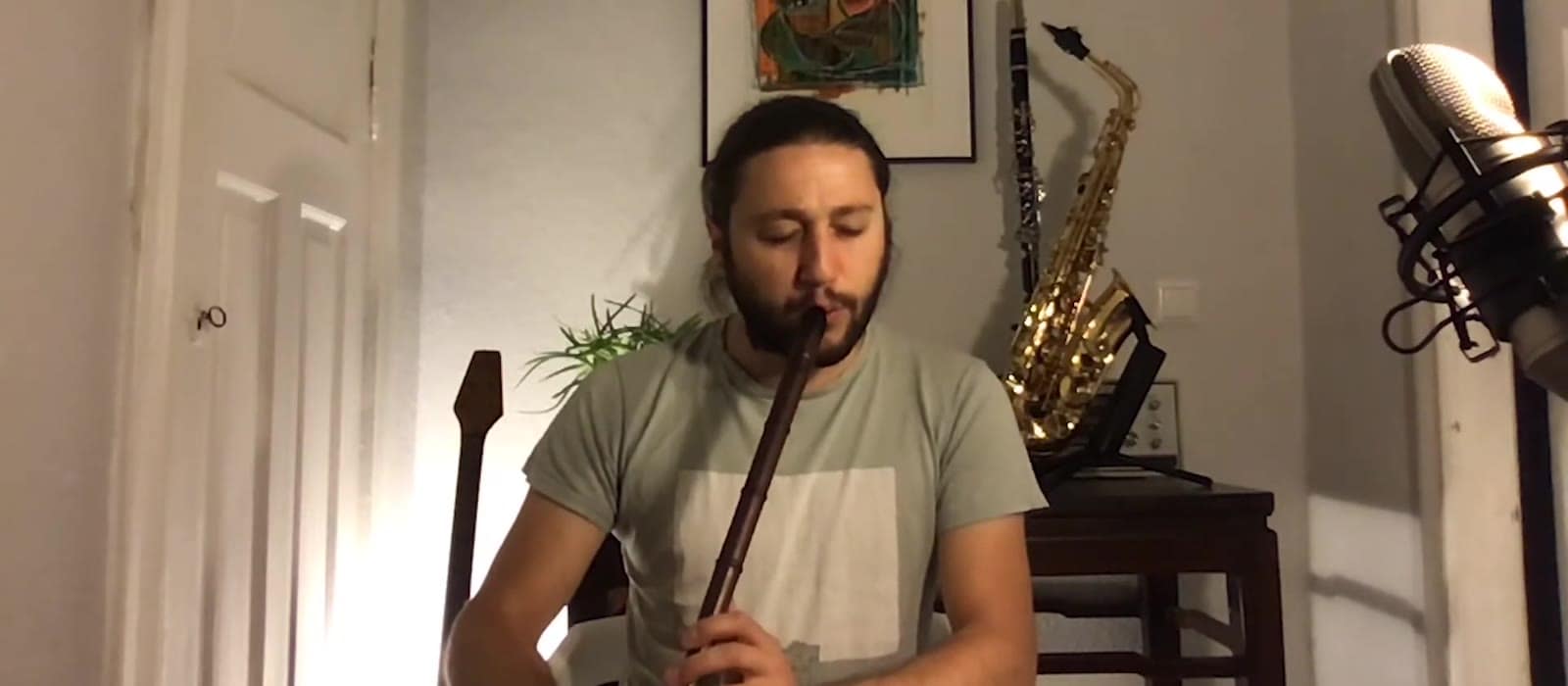
The kaval is an end-blown flute played across Anatolia and the Balkans, long associated with mountain shepherds. Unlike a recorder or transverse flute it is fully open at both ends: the player blows against the sharpened rim, holding the instrument at an angle, and shapes the pitch with breath pressure alone as much as with the fingers.
Construction and sound
Traditionally carved from woods like apricot, plum or cornel cherry, the kaval carries seven finger holes and a thumb hole, plus extra unfingered holes that tune its intonation. Its range spans more than two octaves, from whisper-soft, overtone-rich lows to piercing highs — a warm, melancholic voice that suits slow airs and fast dance tunes alike.
How Deniz Mahir plays it
The kaval was one of the first traditional winds in Deniz Mahir Kartal’s hands, rooted in his training in Turkish folk music at the Istanbul Technical University Conservatory. It remains central to his live sets, where its pastoral breathiness cuts through electronic textures.
Hear it: watch Deniz Mahir play the kaval.